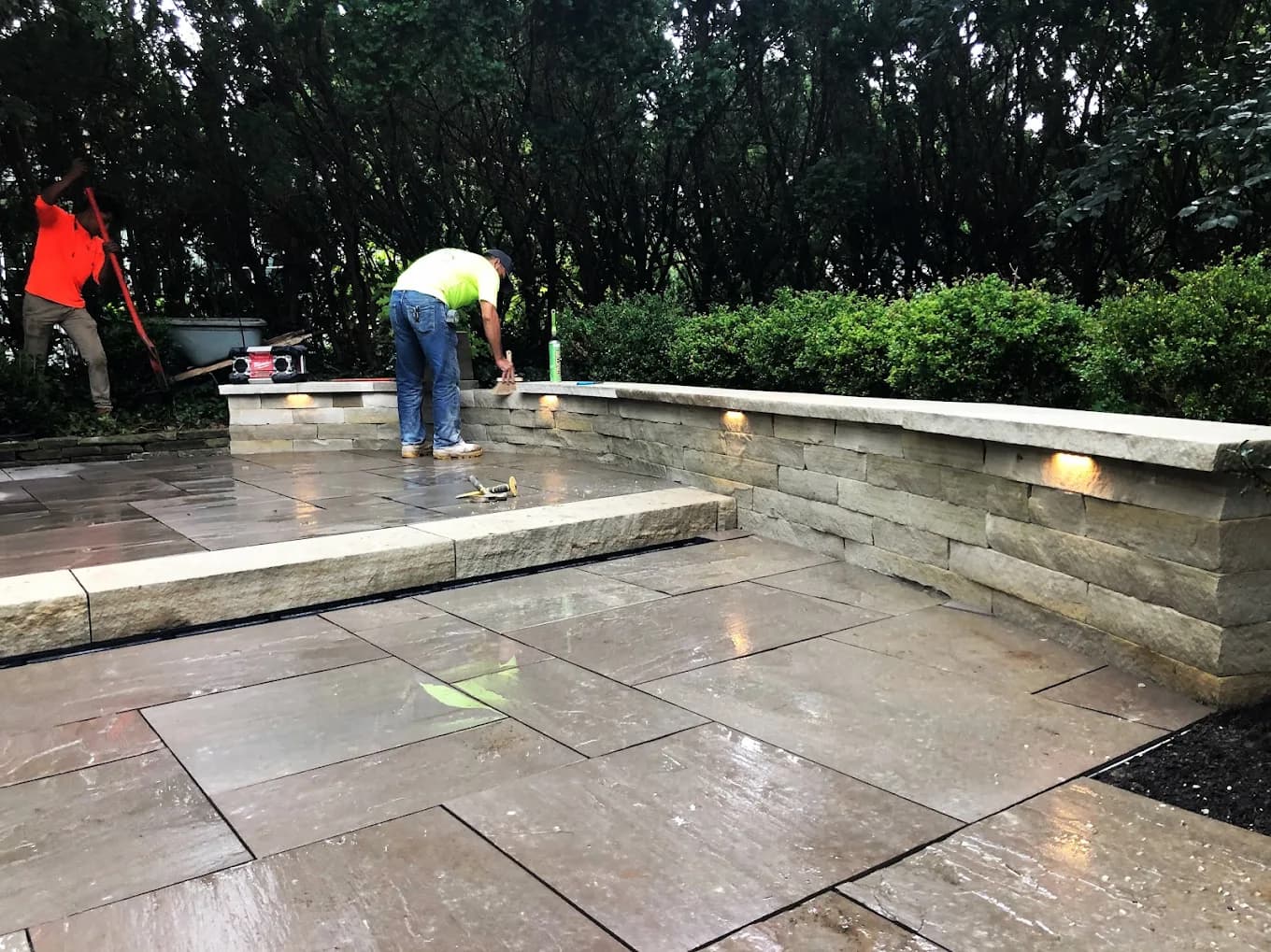
The Freeze-Thaw Problem
Northeast Ohio averages more than 40 freeze-thaw cycles per year. Water expands roughly 9% when it freezes — and any water that works its way into a crack, pore, or poorly compacted joint will use that expansion to do damage. This is the single biggest factor we consider when selecting patio materials, and it largely explains why some options that look great in warmer climates don't belong here.
The base is equally important as the surface. Every hardscape project we install gets a minimum 6-inch compacted aggregate base with proper grading for drainage. Shortcuts at this stage — thin base, poor compaction, no drainage slope — are what cause heaving and settling within three to five years, regardless of what surface material sits on top.
Concrete Pavers
Manufactured concrete pavers are our most-installed patio surface. They're engineered specifically for residential hardscape: dense, consistent thickness, and designed with joints that allow for slight movement without cracking the surface. When a harsh Ohio winter heaves one section, individual pavers can be lifted, the base re-leveled, and the pavers reset — no grinding, no patching, no visible seams.
The design range is broader than most homeowners expect. Large-format 24×24 slabs give a clean, contemporary look. Tumbled cobblestones read more traditional. Running bond and herringbone patterns add movement. Manufacturers like Belgard and Unilock offer color blends that genuinely complement stone foundations and brick homes.
- Strength: 8,000+ PSI compressive strength — significantly harder than a poured concrete slab
- Repairability: individual units lift and reset without visible evidence
- Maintenance: re-sand joints every few years; seal every 3–5 years to protect color
- Installed cost: $18–$28/sq ft depending on pattern complexity and product line
Poured Concrete
Poured concrete has a complicated reputation in Ohio, and some of it is earned — but mostly from improperly installed slabs. A poured slab done right, with a quality mix, adequate thickness, and control joints cut at the correct spacing, is a legitimate option for the right application.
The control joint layout is the critical variable. Joints cut every 8–10 feet give the slab a predictable place to relieve stress — invisibly, along the joint — instead of randomly across the surface. Most cracked Ohio concrete slabs we see have joints spaced too far apart, cut too shallow, or missing entirely.
We recommend poured concrete for large, utilitarian areas: driveways, wide aprons, and simple rectangular pads where cost efficiency matters more than design flexibility. For primary outdoor living spaces, we almost always steer toward pavers.
- Installed cost: $10–$16/sq ft — the most cost-effective option
- Finish options: broom, exposed aggregate, stamped, acid-stained
- Repairability: poor — cracks are difficult to patch without visible evidence
- Best for: driveways, large flat pads, utilitarian areas
Natural Stone
Not all natural stone belongs in Ohio, and that's the most important thing to understand before choosing it. Travertine is highly porous and does not survive our freeze-thaw cycles reliably — we won't install it as an outdoor patio surface. Sandstone softens and flakes over time. Most imported limestone behaves similarly.
The stones that do perform well here are bluestone (particularly thermal-finish, which provides grip and resists moisture absorption), granite, and dense Ohio fieldstone for walls and borders. These materials age genuinely well — they develop character rather than just deteriorating.
Natural stone carries a premium in both materials and labor. Each piece varies in thickness, so installation is slower and more precise than pavers. But the result is a one-of-a-kind surface that no manufactured product replicates, and a well-built bluestone patio should outlast the house it sits behind.
- Best choices for Ohio: thermal bluestone, granite, dense fieldstone
- Avoid outdoors in Ohio: travertine, sandstone, soft limestone
- Installed cost: $28–$50+/sq ft depending on stone and pattern
- Maintenance: granite needs minimal sealing; bluestone benefits from a penetrating sealer every 2–3 years
How to Choose
There is no universally best option. Here is how we frame the decision during a consultation:
- If budget is the primary driver and the space is utilitarian, poured concrete with proper joints is a sensible choice.
- If you want design flexibility, long-term repairability, and a material proven in Ohio conditions, concrete pavers are the right call for most homeowners.
- If you want a genuinely custom result and the longevity of the material matters more than the upfront cost, thermal bluestone or granite is worth the investment.
We're happy to walk through any of these options during a site visit. Get in touch through our contact page to schedule one.
