Plan the Yard Before the Pool
The most common pool-project mistake we see is treating the landscape as an afterthought, something to sort out once the pool is dug and filled. By then the best opportunities are gone. Equipment access is blocked by fresh hardscape, the grade around the shell is whatever the pool crew left it, and the surround becomes a patch of whatever fits rather than a designed space.
A pool-ready backyard is planned as a whole from the start: where the pool sits, how water moves around it, how the deck and patio relate to the house, where the fence runs, and what gets planted for privacy and screening. Sequencing all of that together is what separates a backyard that feels resolved from one that feels like a pool dropped into a lawn.
For Northeast Ohio specifically, the plan has to account for clay soil, freeze-thaw movement, and a swim season that runs roughly Memorial Day to Labor Day. Every material and detail is chosen to survive winters when the pool is closed and the yard is frozen for months.
Grading and Drainage Around the Pool
Grade is the foundation of a pool project the same way it is for any landscape. Water has to move away from the pool shell, away from the equipment pad, and away from the house, never toward them. A pool sitting in a low spot collects surface runoff, mud, and debris every time it rains, and saturated soil against the shell creates pressure problems in a freeze-thaw climate.
Around the pool we establish positive slope on the surrounding grade and, in clay soil, frequently install subsurface drainage to keep groundwater from pooling against the structure. Deck drains, area drains at low points, and a routed outlet all keep the surround from becoming a slip hazard and protect the investment underneath. If the yard already has a drainage problem, it must be solved before the pool goes in, not after.
This is where a pool project and a drainage project overlap completely. The same clay, the same freeze-thaw cycles, and the same need for a legitimate outlet all apply. We size and route pool-area drainage the same way we would a standalone backyard drainage correction.
Equipment Access and Staging
A pool excavation is a heavy-equipment job. Excavators, dump trucks, and delivery of the shell or wall panels all need a path into the backyard, and the spoils from digging a pool in clay add up to a serious volume of heavy material that has to be hauled out. On tight suburban lots in Shaker Heights, Cleveland Heights, and Pepper Pike, access is often the single biggest constraint on the whole project.
Planning access early means deciding which fence section comes out, which plantings are temporary, and where equipment can stage without destroying the parts of the yard you intend to keep. It is far cheaper to remove and reset a fence panel on purpose than to repair a landscape that got driven over because no one mapped the route in advance.
We coordinate this sequencing so that hardscape, fencing, and finish planting happen after the heavy work is done, in the order that avoids tearing out finished work to get equipment back through.
Patio and Deck Surrounds
The surround is where the pool becomes a place to spend time rather than just a body of water. Material choice matters more here than almost anywhere else on the property, because the surface is wet, walked on barefoot, and exposed to full Ohio freeze-thaw every winter.
We steer toward concrete pavers and thermal-finish bluestone for pool surrounds. Both provide grip when wet, both are proven in this climate, and pavers in particular can be lifted and reset if a section heaves, without grinding or patching. We avoid materials that get slick or absorb water and spall, which rules out several stones that look fine in warmer regions. A minimum 6-inch compacted aggregate base with proper drainage slope goes under all of it.
Beyond material, the surround is a design problem: how wide the deck runs on each side, where lounge and dining zones sit, how the geometry relates to the house and the pool shape, and where low walls or planters define the edges. Western Pennsylvania pool builders such as Elements Landscape Management document full pool-and-surround builds in a comparable climate, and their project examples are a useful reference for how deck layout and material choice come together.
Fencing and Safety Code
A pool fence is not optional. Residential pools are subject to barrier requirements covering fence height, gap dimensions, and self-closing, self-latching gates, and those rules exist for real safety reasons. In Ohio, requirements follow the residential code along with any additional local ordinances, so the specifics need to be confirmed with your municipality before the fence is designed.
Pool barrier codes are broadly similar from state to state because they derive from the same model code. Q&A Fencing published a clear breakdown of pool fence requirements in Pennsylvania that illustrates the kind of detail every homeowner should understand: minimum height, maximum ground clearance, gap spacing between pickets, and gate hardware. Use it to understand the categories, then confirm the exact numbers with your local building department.
Designing the fence alongside the pool and planting, rather than bolting it on at the end, is what keeps it from looking like an afterthought. Fence line, gate placement, and screening plantings should all be resolved on the same plan.
Planting and Privacy
Planting around a pool does two jobs: it screens the space for privacy and it softens the hardscape so the pool feels like part of the landscape rather than an installation. The plant selection near a pool has its own constraints, though. We avoid species that drop heavy litter, fruit, or fine debris into the water, and we keep messy or aggressive-rooted trees well away from the shell and the equipment lines.
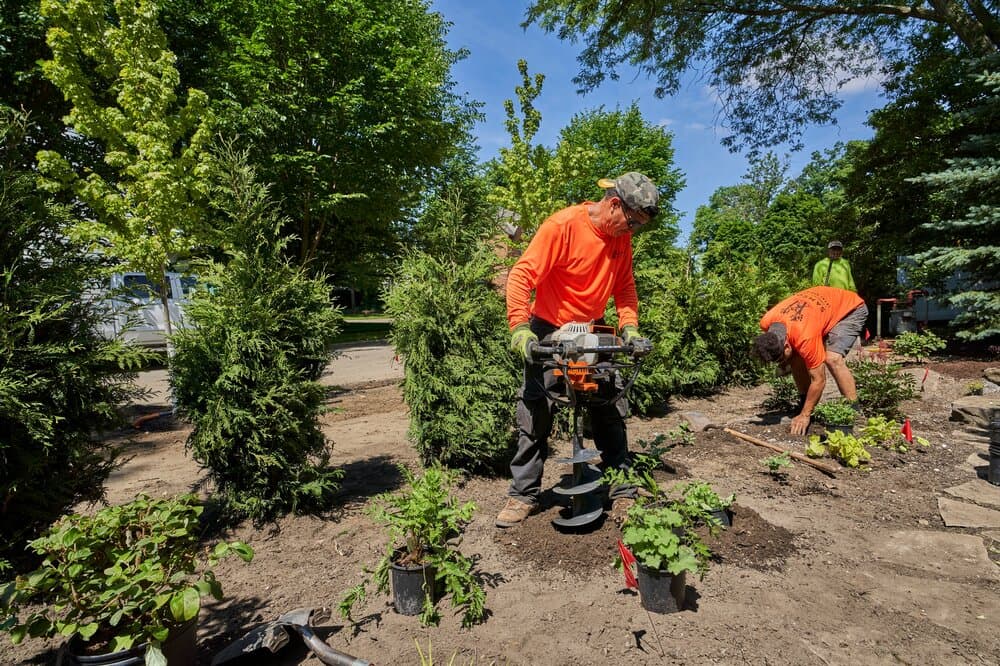
For privacy screening in Northeast Ohio, evergreens that hold structure through winter do the most work, paired with ornamental grasses and clean-foliage shrubs closer to the deck. Grouping plants by their sun and moisture conditions keeps maintenance low, which matters around a pool where you would rather be swimming than pruning.
For a broader set of poolside planting ideas, Q&A Landscaping's guide to pool landscaping in the Pittsburgh area covers screening, low-litter plant choices, and surround design in a climate close to ours. When you are ready to plan a pool-ready backyard, reach out through our contact page and we will walk the site with you.
