Why Summer Evenings Are the Point
In Northeast Ohio, the outdoor living season is short and precious, and a large share of it happens after the sun goes down. Long June and July evenings, dinner on the patio, kids catching fireflies, a fire dying down at 10 pm: that is when a backyard earns its keep. A property that looks polished at noon can go flat and uninviting the moment the light drops, or it can look genuinely dramatic, with depth, shadow, and warmth the daytime version never shows. The difference is deliberate lighting design, not a few fixtures screwed into the ground along a walk.
Good landscape lighting installation in Cleveland does three jobs at once. It extends the hours you actually use the yard through the warm months. It makes the property safer to move through, on steps, along paths, and at the front entry. And it presents the house and the planting the way you want them seen from the street and from inside the house, looking out. Those goals overlap, but they are not identical, and a good plan balances all three rather than chasing only one.
We think about lighting from the first design conversation, not as an add-on once the hardscape is finished. Wire runs are far cheaper to place while the ground is open, and fixture positions respond to where the patio, walls, and plants actually land. Lighting is the last layer of a project to be turned on, but one of the first to plan.
Why Low-Voltage LED Is the Standard
Every system we install is low-voltage LED. A transformer steps household 120-volt power down to 12 volts, which is safer to work around, legal for a homeowner to have in the ground near planting and water, and efficient enough that a whole yard of fixtures draws less power than a couple of old floodlights. LED lamps last for years rather than months, hold their color, and shrug off the temperature swings that Northeast Ohio throws at everything left outdoors.
The parts that matter are the ones you never see. Connections have to be weatherproofed so moisture does not corrode them, wire has to be sized correctly so fixtures at the far end of a run are not dimmer than the ones near the transformer, and runs should be buried cleanly rather than left snaking across a bed. When lighting goes in during hardscape work, we sleeve wire under the patio base and through wall cores before the surface is set, so nothing has to be trenched back through finished work later. Our full landscape lighting service covers the fixtures, wiring, and controls we use and how we plan a system around a specific property.
Landscape Lighting Ideas That Work After Dark
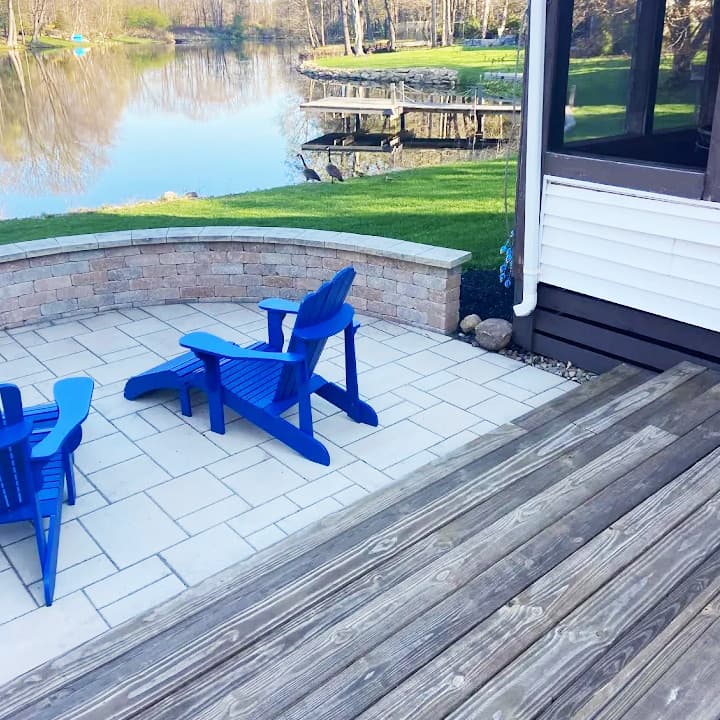
Most landscape lighting ideas that look great in a photo come down to a handful of techniques used with restraint. The mistake we correct most often is too much light, spread evenly, which flattens everything and reads more like a parking lot than a garden. A good scheme lights a few things well and lets the rest fall into shadow. Here are the moves that consistently work in a residential yard:
- Uplighting trees. A single well-placed fixture at the base of a mature specimen tree creates a focal point visible from inside the house and from the street. Aim for a warm 2700K color temperature so the canopy glows rather than looks clinical.
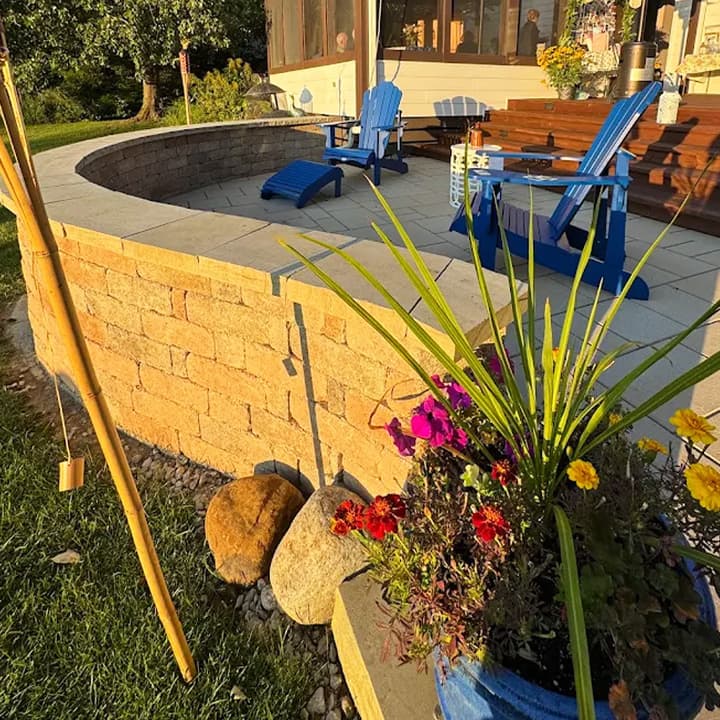
- Grazing hardscape. Fixtures mounted low and angled across a stone wall or paver surface rake light along the texture and bring out relief that flat overhead light erases. Sitting walls and retaining walls are ideal candidates.
- Path lighting. The goal is to light the ground, not the eye. Low, shrouded fixtures that cast a soft pool downward are more effective and far more comfortable than exposed-bulb bollards glaring back at you.
- Step and wall lighting. Lights recessed into stair risers or under a wall cap improve safety and add a clean architectural line. These have to be planned before the walls are built, not added afterward.
- Silhouetting and moonlighting. A fixture behind a plant against a wall throws a shadow-play effect that suits ornamental grasses and multi-stem trees. A fixture placed high in a tree, aimed down through the branches, mimics moonlight dappling across a patio.
For more inspiration on the fixtures and effects themselves, Pittsburgh-area crews such as Q&A Landscaping cover the same low-voltage techniques in a climate close to ours, and their landscape lighting guide is a useful second reference when you are picturing what a scheme could look like.
Designing a Scheme, Not Just Placing Fixtures
A good lighting plan is layered the way a good room is: a few brighter accents, a middle layer of ambient glow, and darkness in between to give the accents somewhere to read against. On a typical backyard that means uplighting one or two key trees, grazing a wall or two, washing the patio edges with low path lights, and marking every step. It rarely means lighting the whole lawn.
Color temperature is the single easiest thing to get wrong. Cool, bluish light (4000K and up) makes planting look gray and dead and gives a house a harsh, commercial feel. We stay in the warm 2700K to 3000K range for almost everything, which keeps foliage green, brick and stone warm, and the whole scene inviting. Beam angle matters too: a narrow spot to reach up a tall tree, a wider flood to wash a broad wall or a garden bed.
Lighting also belongs in the same conversation as the surfaces it lands on. The way a paver or bluestone surface takes grazing light depends on the material, which is one more reason we plan lighting alongside hardscape. If you are still choosing surfaces, our patio materials guide walks through how the main options behave in Ohio, and our patios and retaining walls service page shows the kind of walls and sitting areas that make natural lighting anchors.
Installation and the Right Time to Do It
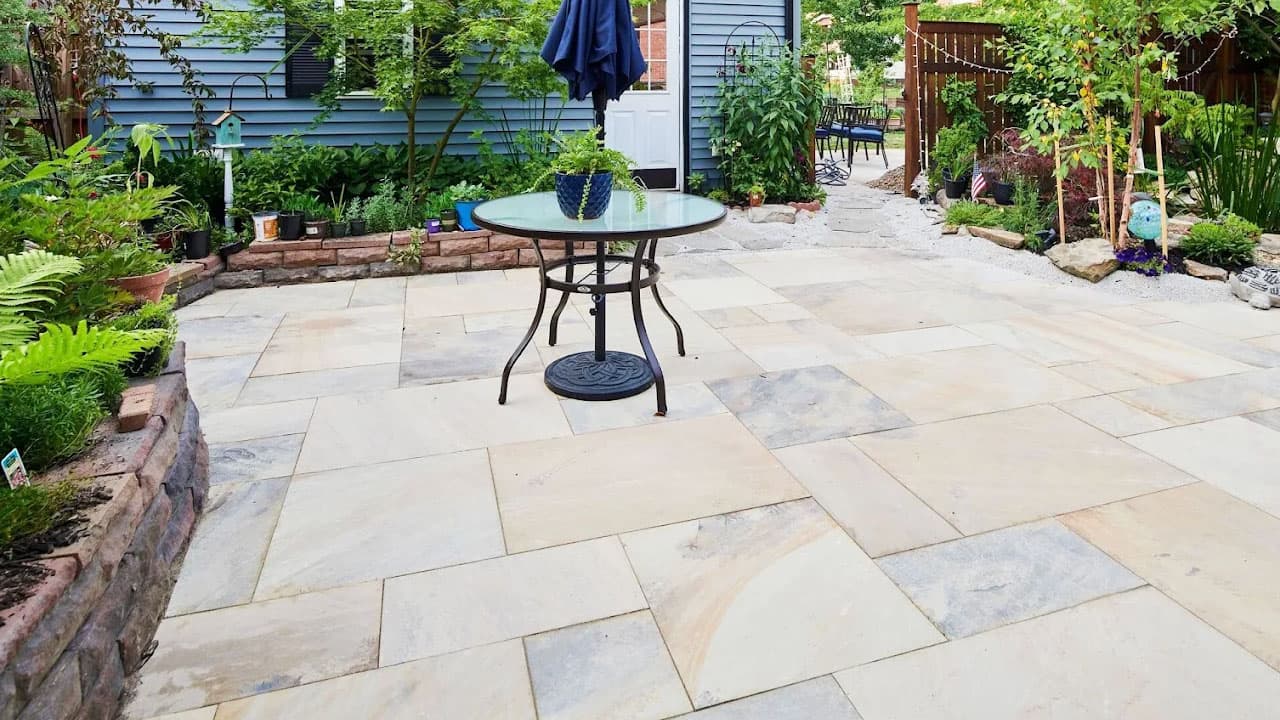
The cheapest, cleanest time to install landscape lighting is during a hardscape or planting project, while the ground is already open. Wire runs slip under the patio base and through wall cores before anything is set, step lights are built into risers as the steps go in, and nothing has to be dug back up. This is exactly why lighting is one of the seven layers we sequence on a full build, from grading through hardscape, planting, and finally lighting, covered in our complete guide to landscaping a Northeast Ohio property.
A retrofit on a finished yard is also very doable. Low-voltage wire can be tucked into bed edges and along walls with minimal disturbance, and because the voltage is low, the trenching is shallow. It is simply more work to route cleanly after the fact than to build it in. Either way, before any digging we call 811 for utility locates, which Ohio law requires 48 hours ahead. Even shallow lighting trenches can find a buried line, and the locate is free.
Lighting is also a natural part of a backyard remodel, where patio, walls, planting, and light are designed together so the finished space works as well at 9 pm as it does at noon. For a sense of scope and budget before a consultation, our landscape design calculator gives a rough starting estimate for a full project.
Controls, Maintenance, and Longevity
A modern low-voltage system runs itself most of the time. An astronomic timer at the transformer tracks sunset and sunrise through the year, so the lights come on at dusk in December and dusk in July without you resetting anything. Smart-home and app-based controllers add zones and scenes, so the front-entry lights can run every night while the full backyard scheme comes on only when you want it. Photocells and motion sensors can be layered in for security lighting at the perimeter.
Maintenance is light but not zero. Fixtures drift out of aim as plants grow and soil settles, so a seasonal walk-through to re-aim uplights and clear leaf litter off lenses keeps the scheme looking intentional. LED lamps last for years, but when one does go, a quality fixture takes a replacement lamp rather than forcing you to dig out the whole unit. Keeping the transformer and connections weatherproof is what carries the system through Northeast Ohio winters without corrosion, which is the failure we see most on cheap big-box kits installed without proper connectors.
Planning a Lighting Project in Northeast Ohio
Whether you are lighting a single specimen tree and a front walk or wiring a whole backyard as part of a remodel, the approach is the same: decide what deserves to be seen after dark, light those few things well, and leave the rest in shadow. Warm color, restraint, and clean wiring do more than sheer fixture count ever will. For a comparable take on how outdoor living spaces come together after dark, Western Pennsylvania builders like Elements Landscape Management document full outdoor-living projects in a climate that mirrors ours.
When you are ready to plan landscape lighting installation in Cleveland or the eastern suburbs, reach out through our contact page and we will walk the property, ideally around dusk, to see how it reads as the light drops. Or start with our landscape design calculator to build a rough budget before we talk.
